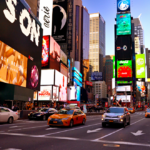
In the world of high-stakes advertising, there is a pervasive and expensive misunderstanding: the belief in the “Master Key Visual.”
The workflow usually looks like this: A creative agency spends months perfecting a single, stunning image for a brand. Once approved, that image is handed over to a production team with a simple instruction: “Resize this for the media buy.” The same visual is then stretched, cropped, and squeezed to fit everything from a massive highway billboard to a vertical bus shelter and a square social media post.
This “one-size-fits-all” approach is a relic of a pre-digital era. In modern Out-of-Home (OOH) and Digital Out-of-Home (DOOH) advertising, a resize is not a strategy—it is a compromise. To achieve true high-impact results, brands must move toward creative versioning. This means adapting the message, layout, and even the “ask” based on format, traffic speed, location, and the specific mindset of the audience at that exact moment.
- The Fallacy of “The Resize”
The fundamental problem with using one master visual across all formats is that it ignores the physics of the viewing environment. A horizontal “Landmark” billboard on a motorway is not just a larger version of a vertical “Street Pillar” in a shopping mall; they are two entirely different communication channels.
- Landscape vs. Portrait Dynamics: Humans scan landscape screens horizontally (left to right). We scan portrait screens vertically (top to bottom). If you simply crop a landscape visual into a portrait frame, you often lose the “leading lines” that guide the viewer’s eye to the brand logo or the product.
- Visual Weight: On a massive highway screen, the product needs to be the hero to be seen from 300 metres. On a vertical street-level screen, the product is often at eye level, allowing for more intricate details or lifestyle elements that would be “noise” on a highway.
- How Traffic Speed Dictates Creative Strategy
One of the most overlooked factors in outdoor advertising is the physical speed of the audience. Multi-format OOH campaigns must adapt their “information density” to match the viewer’s velocity.
The High-Speed Environment (Highway/Arterial Roads)
When your audience is moving at 100 km/h, they are in a state of “low dwell time.” They have roughly 3 to 5 seconds of clear visibility.
- The Versioning Logic: The visual must be stripped to its essentials. No secondary copy, no complex backgrounds, and no small QR codes. The “Master Visual” here should focus on 100% brand recognition and a single, punchy headline.
The Low-Speed/Dwell Environment (Bus Stops, Train Stations, Malls).
Conversely, a pedestrian waiting for a bus has a “high dwell time” of 3 to 7 minutes.
- The Versioning Logic: This is where you can break the rules of OOH. You can include “long-form” outdoor copy, multiple product benefits, and interactive elements like QR codes or NFC triggers. Using the same “5-word” highway visual here is a wasted opportunity to deeply engage a captive audience.
- Contextual Advertising: The Power of Dynamic DOOH
The “Master Visual” assumes that the world is static. However, the environment changes by the hour. Dynamic DOOH allows brands to use real-world data to trigger different versions of a campaign automatically.
Imagine a beverage brand. A “Master Visual” might show a generic shot of their soda. But a high-impact, versioned campaign looks like this:
- Version A (The Morning Commute): “Start your day with a caffeine-free spark.” (Triggered between 7 AM – 10 AM).
- Version B (The Heatwave): “Ice cold and ready.” (Triggered only when the temperature exceeds 30°C).
- Version C (The Rain): “Don’t let the rain dampen the fizz.” (Triggered by local weather APIs).
By creating these variations, the brand moves from being a static “ad in the background” to a relevant “part of the environment.” This is contextual advertising at its most effective—using real-world logic, not theory, to drive intent.
- Hyper-Localization: Speaking the Neighbourhood Language
A national “Master Visual” often feels like it belongs to a faceless corporation. Location-based marketing through creative versioning allows a brand to “act local.”
If a brand is running a campaign across London, Manchester, and Birmingham, the visual elements should reflect that.
- The Manchester Version: Might reference “The Rainy City” or local landmarks like Deansgate.
- The London Version: Might use Tube-inspired iconography or specific neighbourhood callouts like “Hello, Shoreditch.”
Data shows that hyper-local copy increases engagement by up to 40% because it creates a “wink” between the brand and the local citizen. It transforms the screen from a global broadcast into a local conversation.
- The Modular Design System: A Practical Solution
How do you create multiple versions without blowing the budget or the timeline? The answer is a Modular Design System. Instead of building 50 individual ads, agencies should build a “kit of parts” for the campaign.
- The Core Assets: A high-resolution product shot, a brand logo, and a primary colour palette.
- The Copy Library: A set of headlines ranging from 3 words (highway) to 15 words (pedestrian).
- The Background Variations: Different textures or lifestyle images that suit different locations (urban vs. suburban).
This modular approach allows for digital signage adaptation at scale, ensuring that every screen in the media buy is optimized for its specific context without requiring a completely new creative concept for every format.
- Case Study Logic: Spotify Wrapped
The most successful example of “The Myth of the Master Visual” is Spotify Wrapped. Spotify doesn’t have one visual for their end-of-year campaign. They have thousands.
They use data to create versioned visuals for specific cities, specific songs, and even specific user behaviours (“To the person who played ‘Sorry’ 42 times on Valentine’s Day…”). By abandoning the idea of a single master image, they created a campaign that was globally consistent but locally unique. This is the gold standard for high-impact campaigns.
The era of “set it and forget it” advertising is over. In a world of sensory overload, the only way to cut through the noise is to be relevant. Relevance requires context, and context requires multiple versions. Brands that invest in adapting their creative across formats, speeds, and locations will see a significant lift in both recall and ROI.
When you stop treating OOH as a “big poster” and start treating it as a dynamic, context-aware medium, your brand moves from being seen to being remembered.
At Outreach Advertising, we specialize in the “real-world logic” of outdoor campaigns. We don’t believe in the “Master Visual” myth. Our team works as a strategic partner to ensure your campaign is intelligently versioned for maximum ROI. We provide the technical infrastructure for Dynamic DOOH, allowing your creative to respond to live data triggers like weather, time, and location. From consulting on creative versioning for high-speed highway boards to optimizing high-dwell pedestrian screens, we ensure your message is perfectly calibrated for its environment. At Outreach, we don’t just sell space; we engineer impact across every format in the modern landscape.
Related Posts

- Outreach
- February 29, 2024
Why Social Listening is a Brand’s Secret Weapon
Imagine this: You know millions of conversations happen every minute across the vast expanse of ..

- Outreach
- January 31, 2024
The Year Voice Search Reshapes The Digital Marketing Landscape
The digital landscape is no stranger to change, but 2024 marks a pivotal shift in how we intera ..